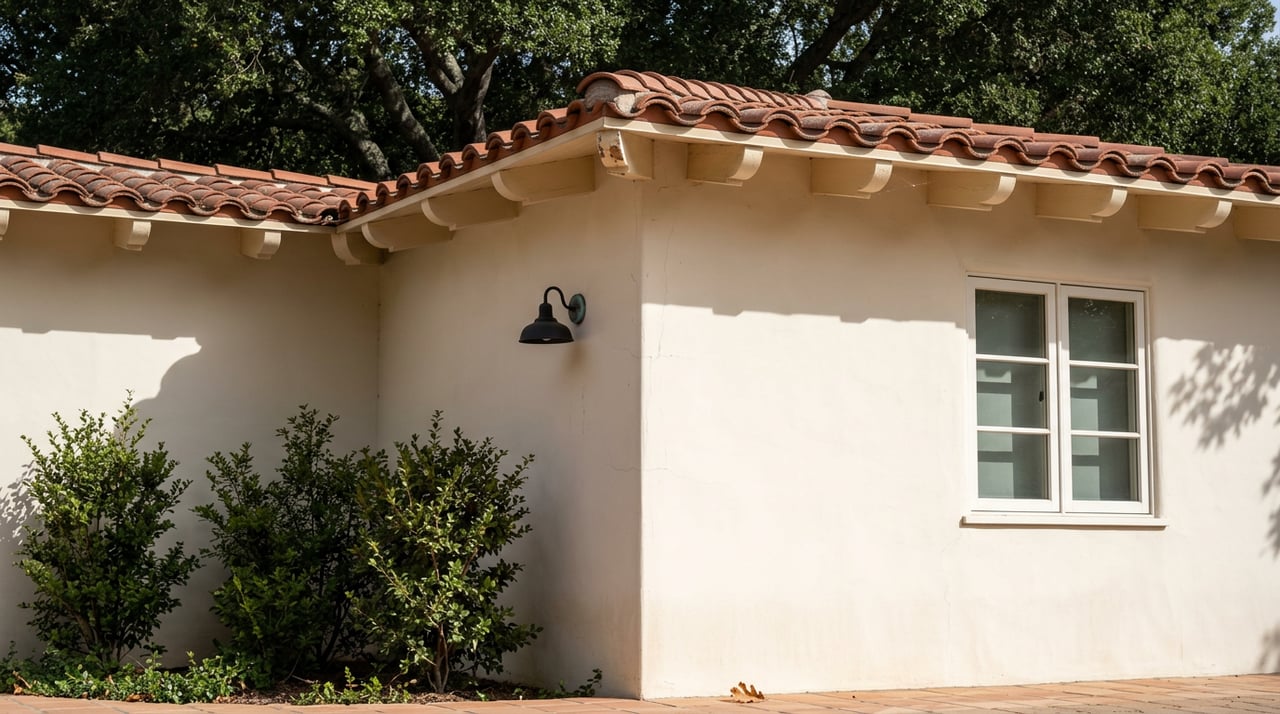
What Catches San Jose Sellers Off Guard At The Closing Table
San Jose's spring market moved faster than the compliance paperwork behind it. Homes sold in a median of 13 days over the three months ending May 2026, at roughly 104% of list price, on 0.82 months of supply. Buyers are still competing. Sellers are still setting terms.
And yet the escrows that stumble in this market rarely stumble on price. They stumble on three point-of-sale requirements that most sellers don't learn about until an inspector's report lands in the transaction coordinator's inbox. The thesis of this post is simple: in a market this fast, the seller's real leverage isn't the offer count on day ten. It's whether the compliance file was closed on day zero.
Since June 2022, the City of San Jose has required a Private Sewer Lateral Pipe inspection, known as the PSLP, for every residential property sale inside city limits. The lateral is the drainage line running from the house to the public sewer main. Under the program, a NASSCO-certified contractor pushes a camera through the line, documents its condition, and the city issues a clearance certificate once the pipe passes. Without that certificate, the transaction cannot close.
Two details separate a smooth PSLP file from a painful one:
None of this is exotic. All of it takes calendar time. And calendar time is the resource sellers under-budget in a 13-day market.
Consider what happens when a seller discovers a failed lateral in escrow instead of before listing.
The buyer's agent receives the report. The buyer, who wrote at 104% of list, now has a repair invoice in hand and a reason to renegotiate. The seller has two options: credit at closing, or delay closing while the repair schedules. Both options transfer leverage. The credit is almost always larger than the retail cost of the same repair scheduled pre-listing, because the buyer is now pricing risk, not pipe.
The May 2026 data makes this asymmetry sharper. A local broker's MLS pull on June 11, 2026 showed the average San Jose single-family home selling at 103.7% of list with a 19-day time on market and 44 days of absorption. Homes are clearing above ask, but the sale-to-list ratio slipped 0.4% from the same month last year and price reductions rose from 17.54% to 25% year over year per Houzeo's April 2026 data. The market still favors sellers. It is not, however, forgiving of surprises. A mid-escrow credit request now lands in a buyer pool that has more permission to push back than it had twelve months ago.
Pre-listing compliance is a seller-side lever. Mid-escrow compliance is a buyer-side lever. Same repair. Different negotiation.
California's SB 407 requires water-conserving plumbing fixtures in single-family residential properties. The point-of-sale version of the law was struck early, so there is no city inspector who arrives to check. What remains is a disclosure line item, and it lives on forms every San Jose seller signs.
On the Seller Property Questionnaire, sellers are asked whether they are aware of any noncompliant plumbing fixtures. On the Transfer Disclosure Statement, the requirement is spelled out per the SCCAOR guidance derived from CAR's SB 837 amendment. The friction is not the retrofit itself, which is a plumber's afternoon in most homes built after 1994. The friction is the checkbox. Sellers who answer "unknown" when they could have answered "compliant" invite a repair request. Sellers who answer "compliant" when a bathroom still has a pre-1994 3.5-gallon toilet invite something worse.
The fix costs less than most listing photography packages. The disclosure risk if it goes unaddressed can cost several multiples of that.
Buried inside San Jose's local disclosure obligations is a requirement that most sellers don't read carefully. During the sale of a residential property, the seller must disclose whether the property complies with the city's street tree maintenance and replacement requirements under Sections 13.28.130.B and 13.28.190 of the municipal code. The rule, per SCCAOR, generally requires one street tree for an interior lot's adjacent street and at least three for a corner lot.
A missing tree is not an escrow-killer. It is a variable that either sits on the disclosure and prompts a buyer question, or gets planted pre-listing and disappears from the negotiation entirely. Neighborhoods with mature Quercus agrifolia canopies, like large parts of Willow Glen and Rose Garden, tend to be in easy compliance. Newer infill lots and homes where a tree was removed years ago without replacement are where this line item quietly surfaces.
The compliance sequence that preserves leverage looks like this:
Sellers who complete these three items pre-listing walk into offer negotiation with the compliance file already closed. That is the point. The buyer sees a property with clean paperwork, and the negotiation returns to price and terms, which is where the current market rewards prepared sellers.
Does the PSLP inspection apply if the buyer is paying cash and waiving contingencies? Yes. The requirement is a city ordinance tied to the transfer, not to the loan. A cash buyer waiving inspection contingencies does not waive the city's certificate.
Can the buyer take on the PSLP obligation after close? Some jurisdictions allow a Transfer of Responsibility form. San Jose's PSLP program requires the certificate before the transaction can close, per multiple certified contractors operating under the ordinance. Confirm the current procedure with the city or your transaction coordinator, because ordinance mechanics do change.
What if the property was built after 1994 and already has low-flow fixtures? The disclosure answers are straightforward and the SB 407 line item becomes a non-event. Verify each fixture rather than assuming, because a single previous-owner replacement with a legacy toilet can undo an otherwise compliant home.
Is the street tree ordinance actually enforced during sale? The disclosure is required. Enforcement is complaint-driven in practice. The risk is not a city fine at closing. The risk is a buyer using it as a negotiation point.
A San Jose sale in mid-2026 is still a seller's market, but the seller who holds leverage is the one whose file is boring. If you are considering a listing this fall, the PSLP inspection, the fixture walkthrough, and the tree count are the three items to resolve first. Andy Sweat at SweatBros can build a pre-listing timeline around your property, coordinate the certified inspectors, and price the home into the current market with the compliance file already closed. Start with an instant valuation and a conversation about what your timeline looks like from here.
Stay up to date on the latest real estate trends.


Work with Andy Sweat and gain a real partner in your real estate journey. Andy takes the time to understand your goals, your concerns, and the story behind your move. He believes real estate is about people first, and property second. Whether buying or selling, Andy guides every step with care, clarity, and confidence.

ANDY SWEAT | CA DRE# 01974462
16780 Lark Ave Los Gatos, CA 95032