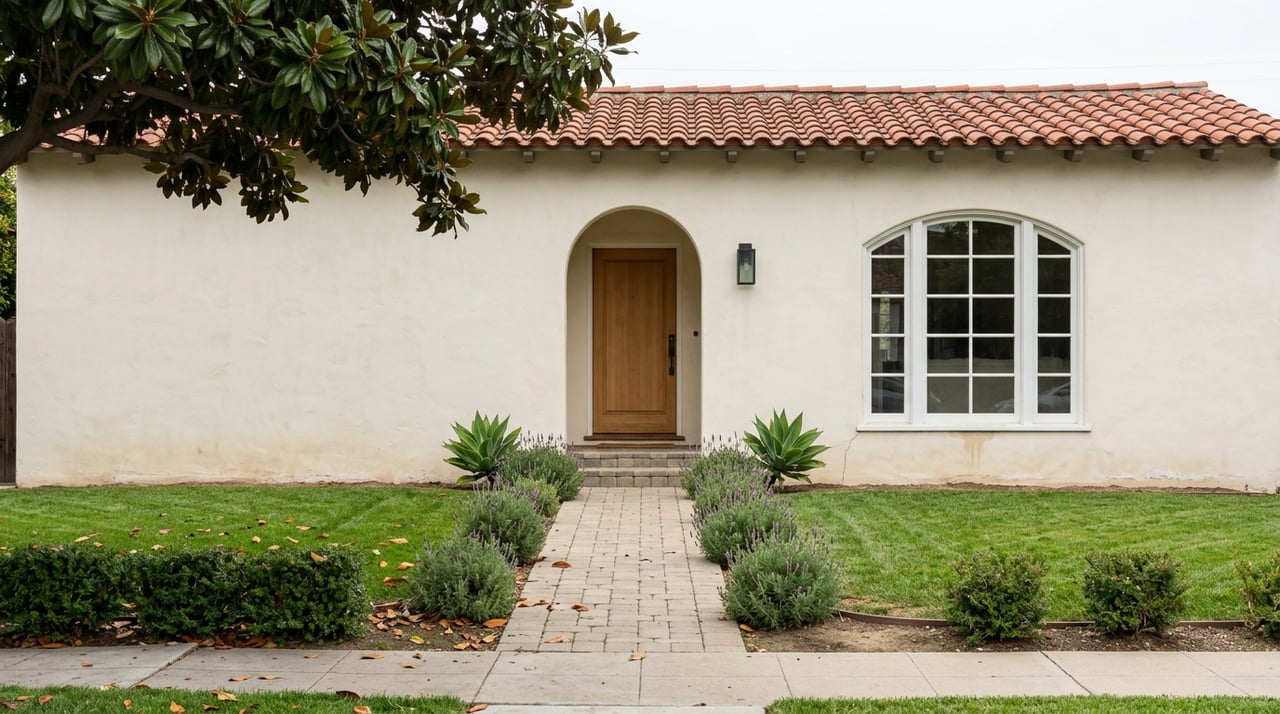
What Rose Garden San Jose Historic Renovation Rules Mean
A Rose Garden owner refinishes the kitchen, repaints the exterior, maybe swaps out a few old windows for something more efficient. None of it looks like a preservation issue. The house is a plain 1950s ranch, not a Victorian with gingerbread trim. Then a permit application or a listing-prep inspection turns up a line nobody expected: as LeCut reports, the property is listed on San José's Historic Resources Inventory as a Potential Structure of Merit, flagged years earlier because of the architect who designed it. The owner had no idea. Local renovation contractors who work in the neighborhood say this catches people off guard often enough that it has become a standard first question before any scope of work gets drawn up.
That's the mechanism worth understanding before you list a Rose Garden home or write an offer on one. Historic status in this neighborhood has almost nothing to do with how grand a house looks from the curb, and the rulebook governing what you can do about it is being actively rewritten by the city this year.
When people picture historic Rose Garden, they picture the Victorians on Hedding, Hester, and Magnolia streets, or the mansions that once lined The Alameda. That's real, but it's a small slice of what's actually on record. San José's Historic Resources Inventory now contains nearly 4,000 properties citywide, built through decades of neighborhood surveys, and a house doesn't need to be famous to land on it. It just needs to fit a pattern the city has already decided matters, whether that's an architect's body of work, a construction method, or a streetscape's collective character.
The classifications aren't interchangeable, and the difference determines how much friction you'll hit before a shovel goes in the ground.
Classification | What it means | Typical permit path |
|---|---|---|
City Landmark or Landmark District | Individually designated by City Council under Municipal Code 13.48 | Full Historic Preservation (HP) Permit, public hearing |
Structure of Merit | Important property that doesn't rise to Landmark level, but preservation is still encouraged under the General Plan | Single-Family House Permit, staff-level review in most cases |
Contributing Structure | Part of a district's collective streetscape, even if unremarkable alone | Single-Family House Permit, must conform to district character |
Conservation Area | A district designated by City Council, like Hanchett and Hester Park | Single-Family House Permit, guided by area-specific standards |
The city's permit guidance is explicit that anything short of a City Landmark or Landmark District uses the more routine Single-Family House Permit rather than a full HP Permit hearing. That's a meaningful distinction for a seller trying to estimate timeline, but it still means every exterior project on that house gets measured against a standard most buyers assume doesn't apply to them.
The eastern half of Rose Garden is Shasta Hanchett Park, and a real piece of it carries a formal designation: the Hanchett and Hester Park Conservation Area. Wikipedia describes its boundaries as The Alameda and Mariposa, Park, and Magnolia avenues. Development began there in 1907 under Lewis E. Hanchett, who brought in John McLaren, the same landscape architect who designed Golden Gate Park, to lay out the streets. The original plan included its own electric streetlights, streetcar service, and a modern sewer system, features that were unusual for a residential subdivision at the time.
Andy Sweat has described the appeal of these blocks plainly: "These are not cookie-cutter houses; these are unique, character-rich homes." That's the draw for buyers. It's also exactly why a Conservation Area designation exists, to keep that character legible from the street even as individual houses change hands and get remodeled.
Ask a contractor who works regularly in San José's historic districts what actually gets rejected, and the list is consistent. Vinyl replacement windows that alter the original profile or muntin pattern are close to an automatic no. Stucco applied over original horizontal wood siding gets the same response. A second-story addition that overwhelms a bungalow's original roofline draws scrutiny, and enclosing a front porch to gain square footage is treated as removing a character-defining feature rather than adding one.
None of that is free. Local contractors put the cost premium for historic-district renovation at 20 to 50 percent above a comparable non-historic scope, driven by custom millwork, true-divided-light window replicas, and the specialized labor those materials require. Add a minimum of two to four months to the timeline for historic review alone, on top of whatever the base permit process already takes.
For a seller, that math matters two ways. If you're the one who did the unpermitted vinyl window swap a decade ago, it can surface during your own listing prep. If you're leaving it as-is, a buyer who plans to renovate after closing needs to know what they're actually buying into before they remove contingencies, not after.
The ground under this is shifting in 2026, in two directions that pull against each other.
On the stricter side, according to LeCut's guide to San José remodeling permits, San José now requires a mandatory seismic assessment for any bathroom project involving structural modification or the addition of significant weight, such as natural stone tile, effective January 1, 2026. That single change affects an estimated 65 percent of bathroom renovation projects citywide, and it has already pushed typical bathroom permit approval timelines from four to five weeks up to six to seven weeks. A historic-district bathroom remodel now stacks that seismic review on top of the existing design review, which is not a small addition for a project that was already running long.
On the looser side, the city is in the middle of a Historic Preservation Ordinance Update, filed as PP25-005, that would add formal definitions for terms like "detrimental" and "substantial alteration" and would let City Council make overriding findings when a project's benefits outweigh harm to a landmark or historic district. That framework already has precedent. In December 2025, the council amended preservation policy to clear the way for a long-delayed music pavilion project in St. James Park, after an appellate court had ruled against the city's prior approach. Ben Leech, executive director of the Preservation Action Council of San José, said at the time that no other city in California carries such broad override language in its local ordinance.
The point isn't that the Hanchett and Hester Park Conservation Area is about to lose its status. It's that the rules determining what counts as an acceptable alteration inside a historic district are being negotiated at the council level right now, in real time, which means a renovation plan that gets flagged today could face a different standard a year from now, in either direction.
Shasta Hanchett Park's median sale price sat near $1.97 million as of June 2026, with homes typically going under contract in about 21 days, well ahead of the roughly 58-day national average. That pace is the part sellers and buyers both tend to underweight. A 21-day market doesn't leave much room for a buyer to research historic status before writing an offer, and it doesn't leave much room for a seller to discover a designation they didn't know about while a deal is already in motion. The friction described above isn't theoretical here. It's compressed into a window measured in weeks, in a neighborhood where the median price already puts renovation budgets under scrutiny.
Check the property against San José's Historic Resources Inventory map before you do anything else, not after an inspector or a permit reviewer brings it up. If the address shows any designation, a call to a City Planner or the Historic Preservation Officer will tell you whether you're looking at a Single-Family House Permit process or a full HP Permit hearing, and whether the property falls inside the Hanchett and Hester Park Conservation Area specifically. If you're planning exterior work of any kind, the city's "Your Old House" design guidelines are the standard your project will be measured against, and reading them before you hire an architect will save you a redesign later.
Does a Structure of Merit designation lower a home's value? The designation itself doesn't set a price. It changes the renovation math for whoever owns the house next, which is exactly the kind of detail that belongs in a listing conversation rather than a surprise during escrow.
Does interior work require historic review? Ordinary maintenance and interior changes that don't alter the exterior appearance generally don't require an HP Permit. The scrutiny is concentrated on anything visible from the street, which is why kitchen and bathroom interiors usually move faster than window or siding projects.
Can a designation be removed? If a proposed designation is formally denied, San José's Municipal Code says any associated permit requirement goes away, but the fees already paid for that review are not refunded. For properties already confirmed on the inventory, removal is not something to plan a sale timeline around.
If you're weighing a sale in Rose Garden or Shasta Hanchett Park and you're not sure what's actually on file for your address, that's worth resolving before the listing goes live, not after an offer comes in. SweatBros can pull the history, walk through what it means for your timeline, and get you a clear read on where your home stands. Get your instant home valuation to start the conversation.
This article is general information, not legal, tax or financial advice. Consult a qualified professional about your situation.
Stay up to date on the latest real estate trends.


Work with Andy Sweat and gain a real partner in your real estate journey. Andy takes the time to understand your goals, your concerns, and the story behind your move. He believes real estate is about people first, and property second. Whether buying or selling, Andy guides every step with care, clarity, and confidence.

ANDY SWEAT | CA DRE# 01974462
16780 Lark Ave Los Gatos, CA 95032